Granny Square Blanket Size Chart: How Many Squares?
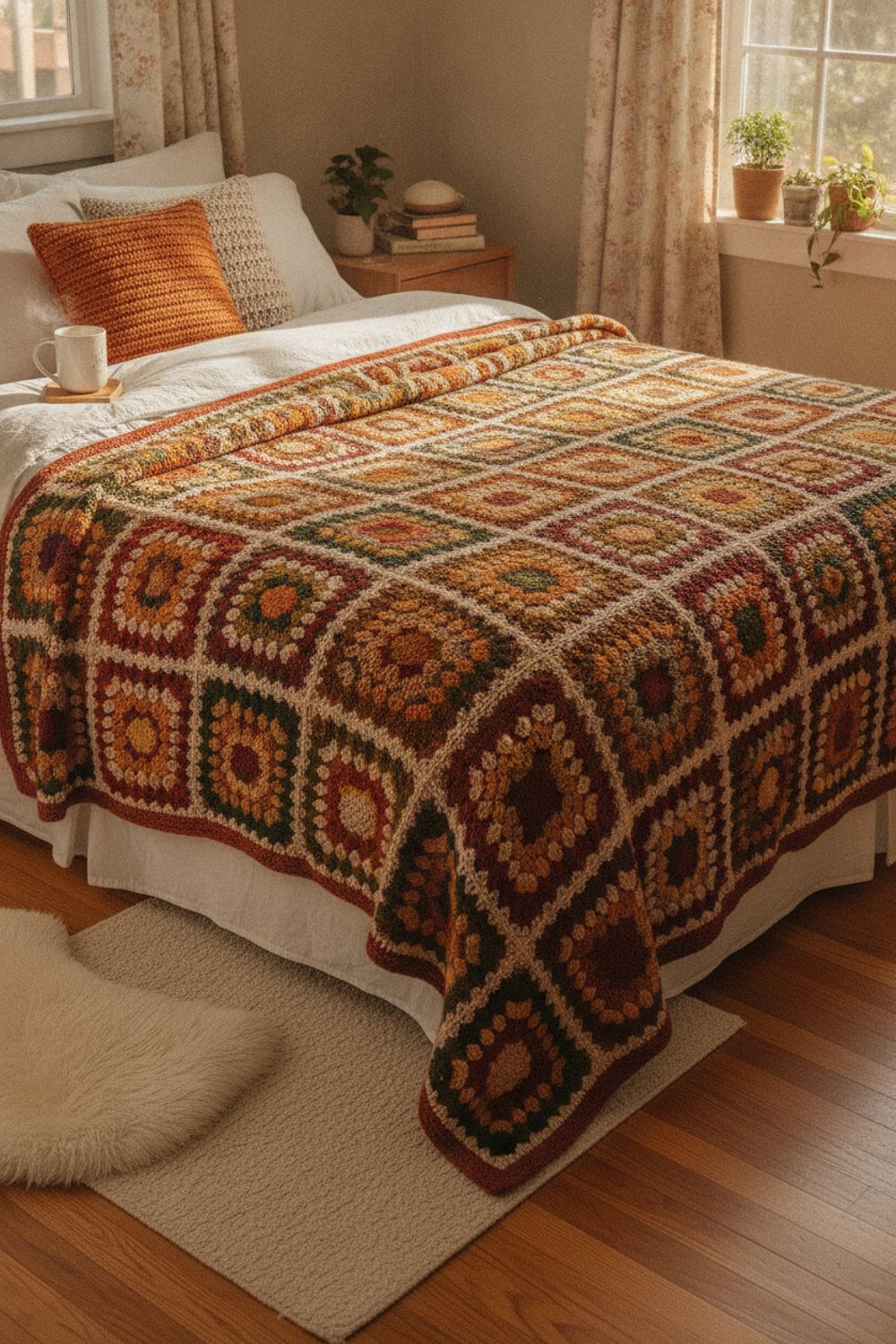
Before you crochet a single granny square, it helps to know where you are going. A baby blanket might need 30 squares. A queen-size bedspread might need more than 200. The answer depends on two things: how big you want the blanket, and how big your squares are.
This granny square blanket size chart does the math for you. Find your blanket size, find your square size, and you will see how many squares to make and how they are laid out. We also explain how to adjust the numbers for your own squares, joins and border.
What You’ll Need
- One finished, blocked test square
- A flexible measuring tape
- A blocking mat and pins
- A notebook or the notes app on your phone
- A calculator
Step 1: Pick Your Blanket Size
Blanket sizes are not fixed by any official standard, and different sources list slightly different numbers. The sizes below come from Sarah Maker’s crochet blanket size chart, which is a widely used reference. Her bed sizes include about 12 to 16 inches of drop on each side.
| Blanket | Size (inches) |
|---|---|
| Lovey | 12 x 12 |
| Stroller | 30 x 36 |
| Receiving | 40 x 40 |
| Baby (average) | 42 x 52 |
| Crib | 45 x 60 |
| Toddler / Lapghan | 36 x 48 |
| Child | 40 x 50 |
| Square throw | 50 x 50 |
| Small throw | 52 x 60 |
| Medium throw | 54 x 66 |
| Oversized throw | 60 x 72 |
| Twin | 66 x 90 |
| Full / Double | 80 x 90 |
| Queen | 88 x 92 |
| King | 104 x 92 |
Step 2: Measure Your Square
Step 1: Make one square with the exact yarn and hook you will use for the blanket.
Step 2: Block it. Pin it flat, mist it with water, and let it dry.
Step 3: Measure it from side to side, not corner to corner. Round to the nearest half inch.
Your test square tells you more than any pattern can, because everybody’s tension is different. As a real example, Sarah Maker’s free Granny Square Blanket uses a 5-round square that measures 6 inches with worsted yarn and a 6 mm hook.
The Granny Square Blanket Size Chart
Each cell shows squares across x squares down = total squares. Numbers are rounded to the nearest whole square, so your blanket may come out an inch or two smaller or larger than the target before the border.
| Blanket (inches) | 4″ squares | 5″ squares | 6″ squares | 8″ squares | 12″ squares |
|---|---|---|---|---|---|
| Lovey (12 x 12) | 3 x 3 = 9 | 2 x 2 = 4 | 2 x 2 = 4 | 2 x 2 = 4 | 1 x 1 = 1 |
| Stroller (30 x 36) | 8 x 9 = 72 | 6 x 7 = 42 | 5 x 6 = 30 | 4 x 4 = 16 | 2 x 3 = 6 |
| Receiving (40 x 40) | 10 x 10 = 100 | 8 x 8 = 64 | 7 x 7 = 49 | 5 x 5 = 25 | 3 x 3 = 9 |
| Baby (42 x 52) | 10 x 13 = 130 | 8 x 10 = 80 | 7 x 9 = 63 | 5 x 6 = 30 | 4 x 4 = 16 |
| Crib (45 x 60) | 11 x 15 = 165 | 9 x 12 = 108 | 8 x 10 = 80 | 6 x 8 = 48 | 4 x 5 = 20 |
| Lapghan (36 x 48) | 9 x 12 = 108 | 7 x 10 = 70 | 6 x 8 = 48 | 4 x 6 = 24 | 3 x 4 = 12 |
| Child (40 x 50) | 10 x 12 = 120 | 8 x 10 = 80 | 7 x 8 = 56 | 5 x 6 = 30 | 3 x 4 = 12 |
| Square throw (50 x 50) | 12 x 12 = 144 | 10 x 10 = 100 | 8 x 8 = 64 | 6 x 6 = 36 | 4 x 4 = 16 |
| Small throw (52 x 60) | 13 x 15 = 195 | 10 x 12 = 120 | 9 x 10 = 90 | 6 x 8 = 48 | 4 x 5 = 20 |
| Medium throw (54 x 66) | 14 x 16 = 224 | 11 x 13 = 143 | 9 x 11 = 99 | 7 x 8 = 56 | 4 x 6 = 24 |
| Oversized throw (60 x 72) | 15 x 18 = 270 | 12 x 14 = 168 | 10 x 12 = 120 | 8 x 9 = 72 | 5 x 6 = 30 |
| Twin (66 x 90) | 16 x 22 = 352 | 13 x 18 = 234 | 11 x 15 = 165 | 8 x 11 = 88 | 6 x 8 = 48 |
| Full (80 x 90) | 20 x 22 = 440 | 16 x 18 = 288 | 13 x 15 = 195 | 10 x 11 = 110 | 7 x 8 = 56 |
| Queen (88 x 92) | 22 x 23 = 506 | 18 x 18 = 324 | 15 x 15 = 225 | 11 x 12 = 132 | 7 x 8 = 56 |
| King (104 x 92) | 26 x 23 = 598 | 21 x 18 = 378 | 17 x 15 = 255 | 13 x 12 = 156 | 9 x 8 = 72 |
How to read it: Say you want a small throw and your squares are 6 inches. Go to the “Small throw” row and the “6” squares” column: 9 x 10 = 90. That is 9 squares across and 10 squares down, for a blanket of about 54 x 60 inches before the border.
Step 3: Adjust for Joins and Border
The chart assumes squares sit edge to edge. In real life, two things change the final size:
- Joins. Most sewn joins and flat slip stitch joins add almost nothing. A single crochet seam or zigzag chain join can add a little width to every seam, and that adds up across 10 or 15 squares.
- Border. A border adds to every side. A simple single crochet round adds very little. A wide border of several rounds can add several inches to each side.
If your squares come out a bit small, a wider border is the easiest fix. If you are already close to your target, keep the border narrow.
Step 4: Use This Formula for Any Size
If your square size is not in the chart, use this simple math:
Step 1: Blanket width ÷ square size = squares across. Round to the nearest whole number.
Step 2: Blanket length ÷ square size = squares down. Round to the nearest whole number.
Step 3: Squares across x squares down = total squares.
Example: You want a 50 x 60 inch throw and your squares measure 7 inches.
50 ÷ 7 = 7.1, so 7 across. 60 ÷ 7 = 8.6, so 9 down. 7 x 9 = 63 squares, for a blanket of about 49 x 63 inches before the border.
Common Mistakes (and How to Fix Them)
- Measuring before blocking. Squares often grow or settle after blocking. Always measure a blocked square.
- Measuring corner to corner. That gives you the diagonal, which is much longer. Measure straight across, side to side.
- Changing yarn or hook halfway. Even the same weight from a different brand can change your square size. Buy all your yarn at the start if you can.
- Forgetting the border. Plan your border before you finish the last row of squares, so you know how much it will add.
- Rounding everything up. If you round every number up, a queen blanket can end up several inches too big on each side. Round to the nearest whole square instead.
Tips
- Larger squares mean fewer squares and fewer ends to weave in. If you dread finishing, choose 8- or 12-inch squares.
- Smaller squares give you more chances to play with color, which is great for scrap blankets.
- Make 2 or 3 extra squares. They are handy if one comes out the wrong size or color.
- Lay out your squares before joining and take a photo. It is much easier to fix color placement now than after joining.
- Need the yarn amount too? Weigh your test square and multiply by the number of squares, then add extra for joining and border.
FAQ
How many granny squares do I need for a throw blanket?
For a 50 x 60 inch throw, you need roughly 120 five-inch squares (10 x 12), 90 six-inch squares (9 x 10), or 20 twelve-inch squares (4 x 5). Measure your own blocked square first, because your size may be a little different from these.
How many 6-inch granny squares make a queen blanket?
For a queen blanket of about 88 x 92 inches, you need about 15 x 15 = 225 six-inch squares. That gives you roughly 90 x 90 inches before the border. Queen sizes vary between sources, so check your mattress and how much drop you want.
What size granny square is best for a blanket?
There is no single best size. Squares of 5 to 6 inches are very common because they are quick and easy to carry around. Bigger squares mean fewer seams and ends to weave in, while smaller squares give you more color play. Pick the size that suits your patience and your design.
Bookmark this chart and come back to it every time you start a new granny square blanket.